On this page 11 sections
Walk into any tackle shop and you will see a wall of reels that look very different from each other. They are not just different brands: each reel type works in its own way and suits different fish, lures and skill levels. This guide, updated for 2026, explains the main types of fishing reels, what each is good at, and how to choose the right one.
Quick answer: there are three main types of fishing reels: spincast (the easiest, great for kids and first-timers), spinning (the most versatile and the best first reel for most adults) and baitcasting (for heavier lures, precise casts and power). Specialty reels include fly reels, conventional and trolling reels, surf reels and centerpin reels.
We earn a commission if you buy through these links, at no extra cost to you. Pinfishing is a participant in the Amazon Services LLC Associates Program, an affiliate advertising program designed to provide a means for sites to earn advertising fees by linking to Amazon.com.
Fishing reel types compared
| Reel type | Ease of use | Best for | Typical line |
|---|---|---|---|
| Spincast | Easiest | Kids, beginners, panfish, small catfish | 6–12 lb mono |
| Spinning | Easy | Almost everything: bass, trout, walleye, inshore salt water | 4–30 lb mono or braid |
| Baitcasting | Moderate | Bass in cover, pike, heavier lures | 10–65 lb fluoro or braid |
| Fly | Casting is a skill to learn | Trout, bass, panfish, salt-water flats | Fly line plus backing |
| Conventional / trolling | Moderate | Offshore, bottom fishing, trolling, big game | 20–130 lb |
| Surf | Easy to moderate | Long casts from beaches and jetties | 15–65 lb |
| Centerpin | Takes practice | Float fishing rivers for steelhead, salmon, trout | 6–12 lb mono |
The product picks below are based on manufacturer specifications and angler feedback, not our own lab tests.
Spincast reels
A spincast reel has a closed face: the spool and pickup are hidden under a cone-shaped cover with a small hole for the line. You hold down a button on the back, swing the rod forward and release the button to cast. Press it again and the line stops.
Because everything is enclosed, spincast reels almost never tangle, and they are the cheapest and simplest reels to learn. That makes them ideal for children and occasional anglers. The downsides are shorter casts, less accuracy, limited line capacity and a basic drag. They work best for panfish, stocked trout and small catfish close to shore.
Zebco Omega Pro Spincast Reel
- Pre-spooled with 10 lb line
Aluminum covers, dial-adjustable Triple Cam drag, dual-paddle handle, left or right-hand retrieve.
The Omega Pro is Zebco's premium spincast reel. It has aluminum covers, a soft-touch thumb button and a dial-adjustable drag, and it comes pre-spooled with 10 lb line. It is a good upgrade from the cheapest push-button reels.
Spinning reels
The spinning reel is the most popular reel type and the best first reel for most adults. It has an open face and a fixed spool that hangs under the rod. To cast, you flip open the wire bail, hold the line on your finger and release it as you cast. Line spirals off the spool, pulled by the lure.
Spinning reels cast farther and more accurately than spincast reels, handle light lures and live bait very well, and rarely tangle. Sizes range from tiny ultralight reels for trout to large saltwater models that can land tuna. Their main weakness is line twist, and they are less comfortable than a baitcaster with very heavy lures and thick line. Many anglers also buy a spare spool to switch line quickly.
Shimano Stradic FM
- Sizes 1000 to 5000
HAGANE gear, Duracross drag, X-Protect water resistance, Anti-Twist Fin.
The Stradic FM is a smooth, mid-priced reel for both fresh and salt water. It replaces the Stradic CI4+ from the earlier version of this guide, which Shimano has discontinued. For salt water, see our list of the best saltwater spinning reels.
Baitcasting reels
A baitcasting reel sits on top of the rod, and its spool turns during the cast. You release the spool with a thumb bar and control it with your thumb, helped by a brake system and a spool tension knob. That gives excellent accuracy and control, especially for low, precise casts under docks and into cover.
Baitcasters handle heavy lures, thick fluorocarbon and braid, and give more cranking power, which is why they are the standard for bass anglers throwing jigs, crankbaits and swimbaits, and for pike and musky. The trade-off is a learning curve: if the spool spins faster than the line leaves, you get a backlash. They are also harder to use with very light lures.
There are two main styles. Low-profile baitcasters are compact and fit in the palm; they are the most common for freshwater. Round baitcasters hold more line and suit trolling, catfish and heavier saltwater use. For a detailed comparison, read baitcasting vs spinning reels.
Shimano Curado MGL
- Low-profile baitcaster
MagnumLite spool for easier casting, HAGANE aluminum body, Cross Carbon drag.
The Curado MGL is the current version of one of the best-known bass reels. Its light MagnumLite spool starts turning more easily, which helps with lighter lures and reduces backlashes. It replaces the Curado K model we recommended earlier.
Fly reels
In fly fishing, the weight of the fly line carries the fly, not the weight of the lure. The reel stores that line plus backing and supplies drag when a fish runs. Casting skill comes from the rod and your technique, not the reel.
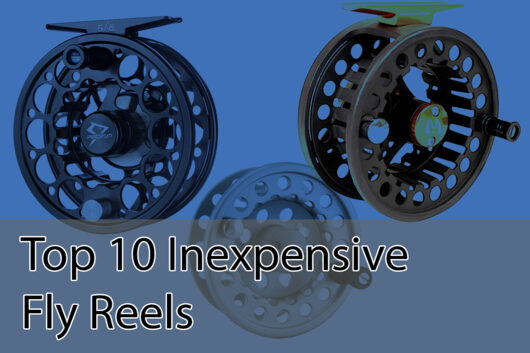
Fly reels are sized by line weight (for example 5/6). Small, light reels suit trout and panfish, while larger reels with strong, sealed drags and plenty of backing are built for salmon, steelhead and saltwater species. Large arbor spools retrieve line faster and reduce coils. Many fly reels last for decades because they are mechanically simple. If you are on a budget, see our list of cheap fly reels.
Orvis Mirage LT
- Premium lightweight fly reel
Lighter version of the Orvis Mirage, with a sealed carbon and stainless drag.
The Orvis Mirage is a premium machined fly reel with a sealed, maintenance-free carbon and stainless drag. The LT version is designed to balance with lighter rods for trout and bass.
Conventional and trolling reels
Conventional reels look like large, round baitcasters. They are built for heavy line, big fish and fishing straight down or behind a boat, rather than for frequent casting. You will see them on offshore boats, party boats and trolling setups for salmon, tuna, marlin and big bottom fish.
Look for a strong frame (machined aluminum on better reels), a smooth multi-disc drag and enough line capacity. They come with either a star drag (simple and affordable) or a lever drag (precise, repeatable settings). Some have two speeds to switch between fast retrieve and more power, and many have a clicker that sounds when a fish takes line. Line-counter reels, which show how much line is out, are popular for walleye and salmon trolling.
Accurate Boss Valiant BV-300
- Compact lever-drag reel, single or two-speed
Lightweight lever-drag reel for jigging and live bait, with a Cam Stop at strike.
The Boss Valiant 300 is a compact, light lever-drag reel built mainly for shallow-water jigging, but it also works for live bait, snapper, salmon and school-size tuna. A detent on the drag lever stops it at the strike setting so you don't push into full drag by accident.
Surf fishing reels
Surf reels are usually large spinning reels, although some surf anglers use conventional reels. What sets them apart is a long, shallow spool that releases line with less friction for long casts, plus protection against salt, sand and spray. They pair with 9 to 13 foot rods.
Good surf reels have sealed or shielded stainless bearings, corrosion-resistant bodies and enough capacity for long casts and long runs. Slow oscillation (the spool moving up and down slowly) lays line neatly, which also helps casting distance.
Shimano Ultegra XR 14000 XSD
- Long-cast surf spinning reel
CI4+ body, slow oscillation, Cross Carbon drag with up to 44 lb, X-Protect.
The Ultegra XR 14000 XSD is the current version of the Ultegra XSD we listed before. Shimano designed it for long-range surf casting, with a CI4+ body, RigidCast spool support, Super Slow 5 oscillation and a Cross Carbon drag rated up to 44 lb. It weighs 18.9 oz.
Centerpin reels
A centerpin reel is a large, narrow spool that turns freely on a central pin, with no gears and no drag in the usual sense. You control the spool with your thumb or palm. The design dates back more than a century and is popular in Great Britain, Canada, and around the Great Lakes.
Its big advantage is a perfectly smooth, drag-free drift: the current pulls the float and line off the spool so the bait moves naturally. That makes centerpins excellent for float fishing rivers for steelhead, salmon and brown trout. They take practice to cast and are a specialist tool.
Okuma Aventa VT-1002
- 4.5 inch spool
Machined from solid aluminum bar stock, two stainless ball bearings, on/off click ratchet.
The Aventa is a popular entry into centerpin fishing. It is machined from aluminum bar stock and spins freely on two stainless steel bearings, and its exposed rim makes palming easy. The 4.5 inch spool suits trout and steelhead.
Which type of fishing reel is right for you?
- Kids and first-time anglers: a spincast reel, or a small spinning reel for older kids.
- Most adult beginners: a 2500 or 3000 size spinning reel on a medium-light rod covers bass, trout, walleye and panfish.
- Bass anglers ready to upgrade: add a baitcaster for jigs, crankbaits and heavy cover, and keep the spinning rod for finesse.
- Salt water from shore: a sealed spinning reel in the 4000 to 8000 range, or a dedicated surf reel for long casts.
- Offshore and trolling: conventional reels with star or lever drags.
- Trout streams and flats: a fly reel matched to your line weight.
- River float fishing: a centerpin reel.
What to look for in any reel
- Size and line capacity that match the fish and line you use.
- A smooth drag. It matters more than the maximum drag number.
- Gear ratio: high for fast lures and picking up slack, low for power.
- Body material: metal for heavy loads, graphite or composite for light weight.
- Corrosion resistance if you fish salt water.
- A matching rod: spinning reels need spinning rods, baitcasters need casting rods.
FAQ
What are the three main types of fishing reels?
Spincast, spinning and baitcasting reels. Fly, conventional, surf and centerpin reels are specialty types.
What is the easiest fishing reel to use?
A spincast reel. You just press a button to cast. A spinning reel is only slightly harder and much more versatile, so most adults quickly move to spinning.
What is the difference between spincast and spinning reels?
Both have a fixed spool, but a spincast reel hides it under a closed cover and uses a push button, while a spinning reel is open with a bail. Spinning reels cast farther and more accurately, hold more line and have better drags.
Which reel is best for saltwater fishing?
For most anglers, a sealed or saltwater-rated spinning reel. Conventional reels are better for trolling, deep bottom fishing and very large fish. Always rinse any reel with fresh water after use.
Can I put any reel on any rod?
No. Spinning reels go on spinning rods, and baitcasting and conventional reels go on casting or conventional rods. Fly reels need fly rods. Also match the reel size to the rod's power and line rating.
Related fishing reports
SpinningTrollingJiggingTwitchingFly fishing